Why the Most Skilled Women in Corporate America Are Still Leaving Money on the Table

The Gap Is Not a Skills Gap. It’s a Positioning Gap.

I have been watching this pattern for years, and I am ready to have the honest conversation most people in our industry avoid.

Women project managers are consistently among the most skilled, most credentialed, and most results-driven professionals in any organization. We manage complexity that would overwhelm most people. We hold projects together when leadership is absent, when budgets get cut, and when timelines get compressed to the point of absurdity. We do it professionally, thoroughly, and often without nearly enough recognition or compensation.

And then a significant number of us go home and under-invest our own money, undercharge for our consulting services, and underestimate what we are actually worth in the marketplace.

I did this for years. Most of us do, until someone names it clearly enough to see it. And if you are a woman in project management or management consulting, I think it is time we talked about this openly.

The skills gap is not the problem

Here is what I know after 14 years in this industry.

The gap between what women PMs bring to the table and what we are compensated for is not a skills gap. It is not a credentials gap. Many of the most credentialed professionals I know — PMP certified, Ivy League educated, decades of experience — are women billing at rates that do not come close to reflecting their actual value.

The gap is a positioning gap. A visibility gap. And in some cases an internalized belief gap that goes deeper than any certification can fix on its own.

We have been conditioned, often subtly and sometimes not so subtly, to believe that our value needs to be proven before it can be claimed. That we should earn the right to charge premium rates rather than set them from the beginning. That being likable and being expensive are somehow in tension with each other.

They are not. But as long as we act as if they are, the market will treat us accordingly.

What corporate America is actually paying for

Let me tell you what I have observed from the inside of large organizations as a management consultant.

Companies are not paying for credentials. They are paying for certainty.

When a struggling organization brings in a consultant at $400, $500, or $600 an hour, they are not paying for the letters after your name. They are paying for the certainty that someone who has seen this problem before will solve it without them having to manage the process themselves. They are paying for confidence. For decisiveness. For someone who walks into the room and makes everyone around them feel like the situation is under control.

Women PMs have all of this. We have been providing it for years, often as employees, often without full credit for the outcomes we drove. The shift from employee to consultant, or from underpriced consultant to premium consultant, is not about acquiring new skills. It is about deciding to package and present the skills you already have differently.

That decision starts in your own mind before it ever reaches a client conversation.

The positioning problem nobody talks about

When I started my own business I made the same mistake most people make. I looked at what others in my field were charging and I priced myself somewhere in that range. I thought that was how pricing worked. You survey the market and you position yourself within it.

That logic sounds reasonable. It is actually one of the most limiting things you can do.

When you price yourself based on what other people are charging, you are competing on price. And when you compete on price you attract clients who are shopping on price. Those clients will always find someone cheaper. They will always negotiate. And they will never fully trust the value of what you deliver, because the way you positioned yourself told them that price was the most important thing about you.

Premium clients — the ones who pay $500 to $800 an hour without flinching — are not shopping on price. They are shopping on fit, on confidence, and on the belief that you can solve their specific problem. They want to feel like they found the right person, not the best deal.

The way you attract those clients is not by lowering your rate. It is by raising your positioning.

What raising your positioning actually looks like

I know that “raise your positioning” can sound like advice that looks good on a slide and does nothing in real life. Here is what it actually means in practice.

Get specific about who you serve and what problem you solve. Not “I am a project manager with 14 years of experience.” That describes your history. It does not describe your value. Something like “I help mid-market companies execute complex operational transformations without the cost or bureaucracy of a Big 4 firm” describes your value. It tells a potential client exactly what they get and why it matters to them.

Build visible authority before you need it. The articles I write are not just content. They are proof of how I think. Every time a potential client reads one, they are forming a view of my expertise before we ever speak. By the time we get on a call, my rate is not a surprise. It is consistent with the person they have already decided they want to work with.

Hold your rate when clients push back. This one is hard. When someone hears your rate and goes quiet or asks if you have flexibility, every instinct trained into most women says to soften the number, to add more deliverables to justify it, or to apologize for it. None of those responses serve you. A simple “that is my rate for this scope of work,” said calmly and without elaboration, communicates confidence in a way that no amount of credential listing ever will.

Invest in yourself visibly. Your LinkedIn presence. Your speaking engagements. Your published writing. These are not vanity exercises. They are the evidence that justifies your rate in the minds of clients who have not yet worked with you.

The investing parallel

Regular readers will not be surprised that I see a direct parallel between this conversation and what I have written about investing.

The same woman who confidently manages a $10 million project budget for her employer will sometimes hesitate to invest $10,000 of her own money. The same consultant who holds a client accountable to a rigorous risk management process will sometimes let her own portfolio drift without a plan or a structure.

We apply our best thinking to other people’s problems all day long. Then we go home and treat our own financial lives with far less discipline than we would accept from a junior team member.

I think this is one of the most important conversations we can have as women in business. Not just about rates. Not just about investing. About the fundamental question of whether we are applying the same excellence to ourselves that we apply to everyone and everything around us.

Because the skills are not the issue. They never were.

What I want you to take from this

If you are a woman in project management, management consulting, or any high-skill professional service, I want you to sit with two questions after reading this.

If a client came to you with the credentials, the experience, and the track record that you have, what would you tell them to charge?

Whatever that number is, that is probably closer to your real rate than whatever you are charging right now.

You have earned the right to claim your value. Not someday when you have one more certification or one more big project under your belt. Now.

The market will rise to meet you when you stop meeting it halfway.


This is the mindset The Income Into Assets Program is built to develop — applying the same professional excellence to your own financial life that you already bring to your work. See how it works.

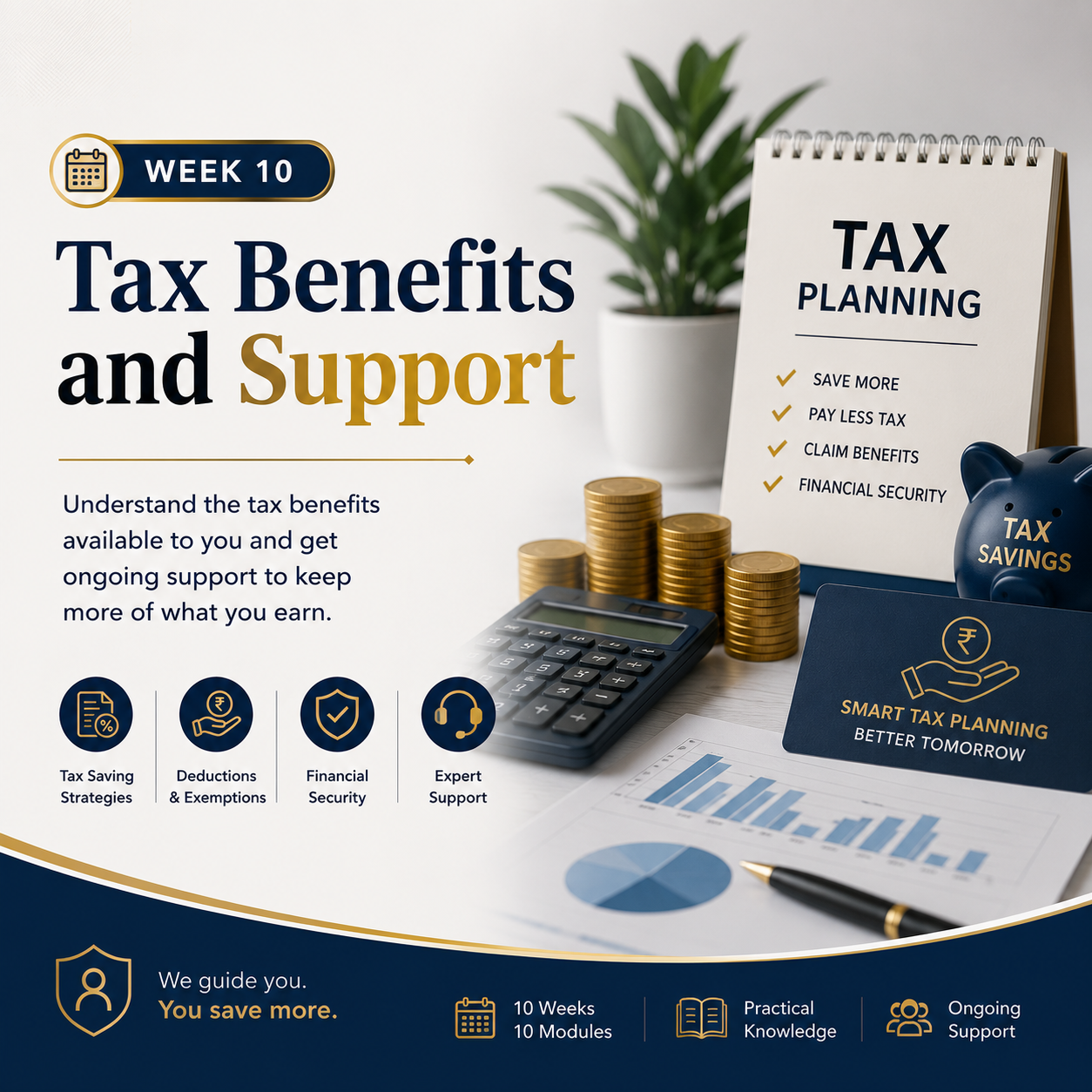
Tax Benefits and Additional Support

I saved this module for last not because it is the least important but because by this point in the program you will have the full context to understand why it matters so much. The money you keep is every bit as valuable as the money you earn. And most people who are building wealth through businesses and real estate are using the tax code in ways that dramatically reduce what they owe legally, ethically, and consistently. That is not a secret available only to the very wealthy. It is knowledge available to anyone who takes the time to understand how the rules actually work. In this module I am going to walk you through the primary tax advantages available to business owners and real estate investors, how to structure your activities to access those advantages, and how to find and work with the right tax professional to make sure you are never leaving legal deductions on the table. This is not tax advice. This is financial education. And for many students it turns out to be the highest return hour in the entire program.

Outcomes

  • Understand the primary tax advantages available to business owners and how they differ fundamentally from what employees have access to, including deductions, depreciation, and business expense treatment
  • Learn how to legally match your business expenses to your income streams to reduce your taxable income so you keep more of what you earn
  • Understand the tax treatment of real estate investments including depreciation deductions, rental income structuring, and how real estate investors use the tax code to their advantage year after year
  • Identify the right type of tax professional for your situation and the specific questions to ask them so you are working with someone who understands wealth building, not just tax filing
  • Complete the program with a full integrated picture of how business ownership, real estate investment, smart savings, and tax strategy work together as a unified and self-reinforcing wealth building system

Real Estate: Building Wealth You Can See

Real estate changed my financial life. Not just buying my first home, although that was a significant milestone. What changed everything was understanding how to build a portfolio of properties that generate income every single month regardless of whether I am actively working or not. That is exactly what I mean when I talk about assets that work for you when you stop working. In this module I am not teaching from a textbook. I am teaching from a portfolio I built myself, property by property, starting from a position where I had no credit and had to build everything from the ground up. I am going to show you how I positioned myself for competitive financing, how I evaluated properties as investments rather than just as homes, what house hacking is and how it can dramatically accelerate your timeline to owning multiple properties, and how to build the right professional team around you. Nobody builds a real estate portfolio alone and knowing who you need and when you need them is as important as knowing how to find the right property.

Outcomes

  • Understand exactly what mortgage lenders look for and how to position your credit profile, income documentation, and debt ratios to qualify for the most competitive terms available to you
  • Learn the concept of house hacking in detail, including how to structure your first property purchase so that rental income offsets or eliminates your mortgage payment entirely
  • Understand how to evaluate any property as an investment using real financial metrics including cash on cash return, cap rate, and net operating income, not just whether you like the house
  • Build the right professional team around your real estate journey including who you need, what to look for in each person, and the questions to ask before you hire them
  • Develop a real estate entry strategy that is specific to your current financial position, whether you are purchasing your first home or your next investment property
  • Leave this module with a clear, actionable real estate plan that connects to your broader wealth building timeline

Business Accelerator

I have launched and run several businesses. Some active, meaning they require my ongoing time and attention. Some passive, meaning they generate income whether I am working that day or not. And I can tell you from genuine experience that the decision to start a business changes the entire structure of your financial life in ways that a salary raise never can. A business gives you access to tax advantages that employees simply do not have. It gives you the ability to build something whose value grows independently of your direct labor. And when it is structured well it becomes an asset, not just a job you gave yourself. In this module I am going to be honest about both sides because the benefits are real and so are the pitfalls. You are going to leave this module knowing what type of business makes sense for your specific life, your skills, and your available resources right now.

Outcomes

  • Understand the real difference between active and passive business models and what each one genuinely requires from you in time, capital, and ongoing attention
  • Separate business myths from business reality so you go in with clear eyes, honest expectations, and a plan that accounts for what it actually takes
  • Identify business ideas that build directly on your existing skills, experience, and professional network so you are not starting from zero but from a position of genuine advantage
  • Understand the tax structure of business ownership and how to set up your business in a way that legally reduces your taxable income from the very beginning
  • Build a structured action plan for your best business idea with milestones, resource requirements, and a realistic timeline that fits your current life

The Investment Menu

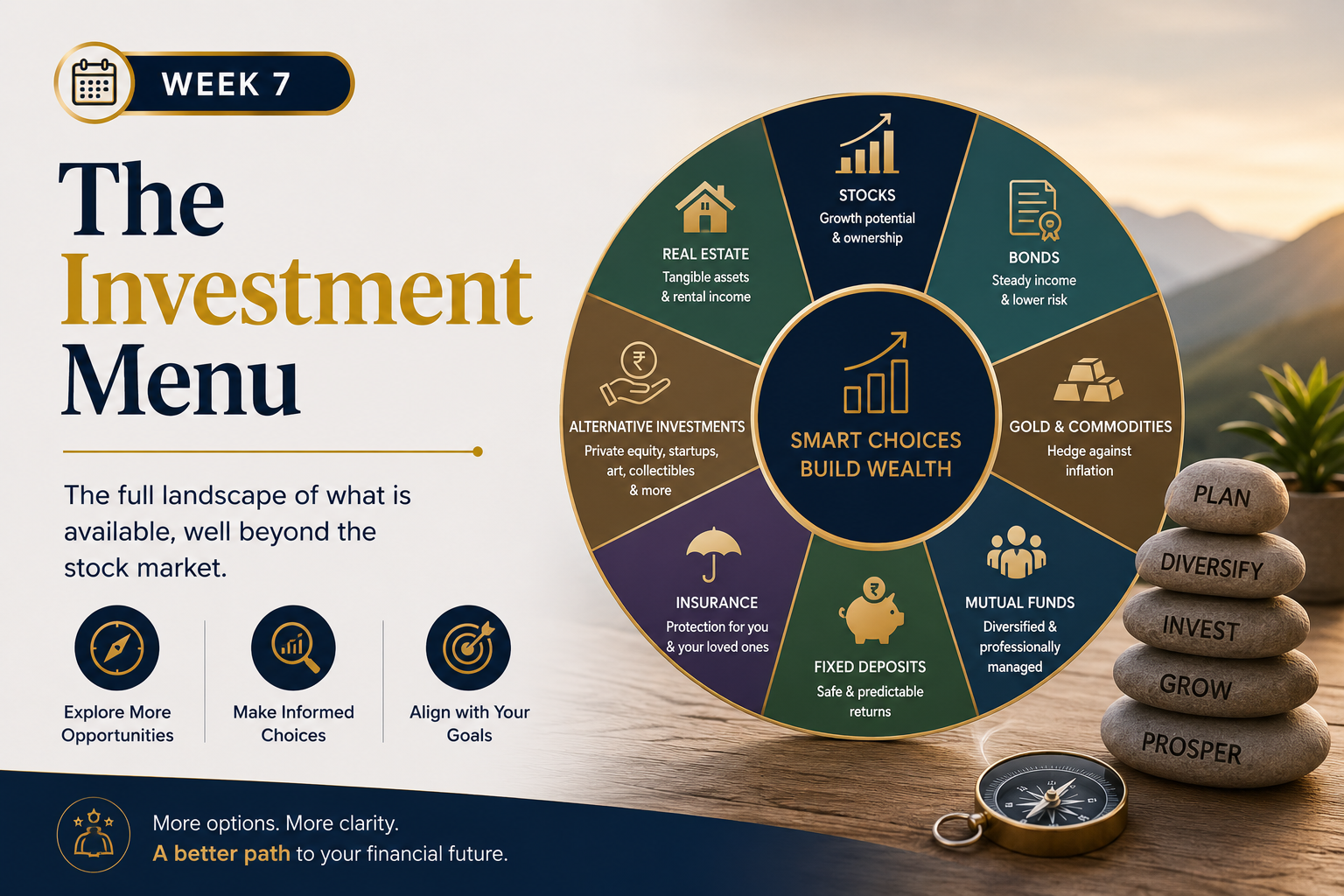
Most people think investing means buying stocks. It does not. I invest in real estate. I actively trade futures markets. I have capital in businesses. I have explored investment categories that most people in mainstream financial media never talk about. The world of investing is genuinely wide and the right investment for you depends entirely on your goals, your timeline, your current financial position, and honestly, your temperament. Some investments reward patience. Others reward active attention. In this module I am going to lay out the full menu of what is available to you, including the non-traditional and alternative categories that are often where the most interesting opportunities live. Most people who go through this module tell me they felt a door open that they did not know existed. That is exactly what I want for you.

Outcomes

  • Understand the full landscape of investment options available to you well beyond the stock market including real estate, business ownership, futures markets, and alternative assets
  • Learn how each investment category generates returns and what the real risks, time commitments, and capital requirements look like for each one
  • Evaluate alternative and non-traditional investments so you have a genuinely complete picture of what is possible rather than just the options your bank tells you about
  • Leave this module knowing which investment categories make sense for where you are right now and which ones to build toward as your wealth and knowledge grow

Cash Flow Ideas

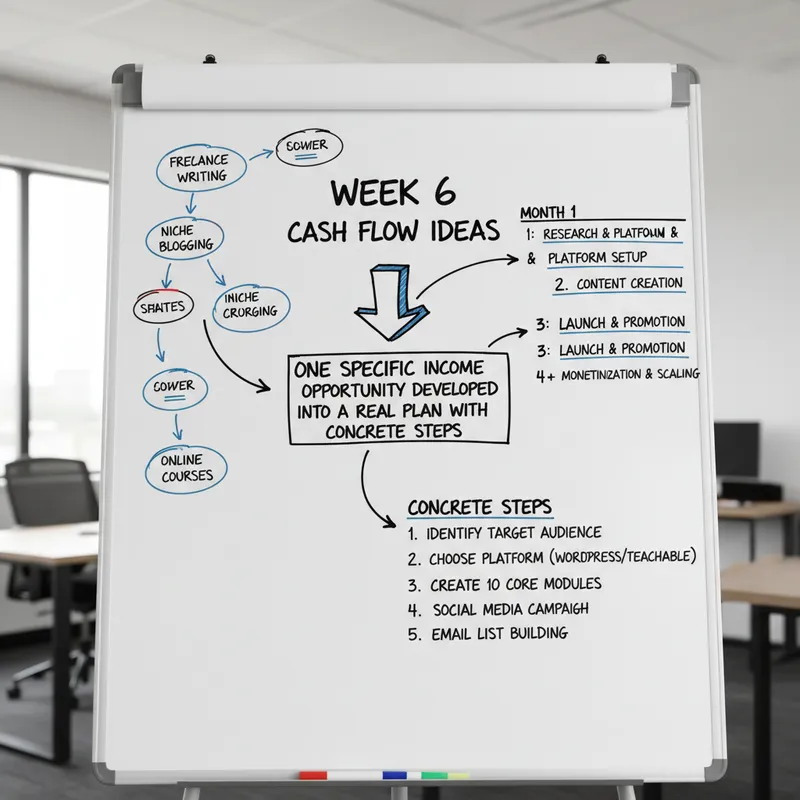
Additional income does not come from working more hours. That is a trap I see professionals fall into constantly. You are already trading your time for money in one place. The goal is to create income that does not require you to trade more time. I learned this by looking honestly at what I was already good at, what I had already built, and how those things could generate returns beyond my primary salary. Whether that was consulting work, a business idea, a rental property, or a trading position, the principle is always the same. You want your skills, your assets, and your money working for you in more than one place at the same time. In this module we are going to identify where your highest value opportunities are right now and turn the best one into a real plan with real steps. Not a list of ideas. An actual plan.

Outcomes

  • Identify your highest value transferable skills and understand how they could be packaged into additional income without requiring you to add unsustainable hours to your life
  • Generate a specific list of realistic cash flow opportunities that fit your actual background, your genuine interests, and your available bandwidth right now
  • Evaluate each opportunity against a straightforward framework so you focus your energy on the one with the best return for your effort rather than trying to do everything at once
  • Build a concrete action plan for your top cash flow opportunity with milestones, resource requirements, and first steps you can begin this week
  • Understand how additional income streams connect to your broader wealth building strategy so each new stream feeds into assets rather than just lifestyle

Making Your Money Work

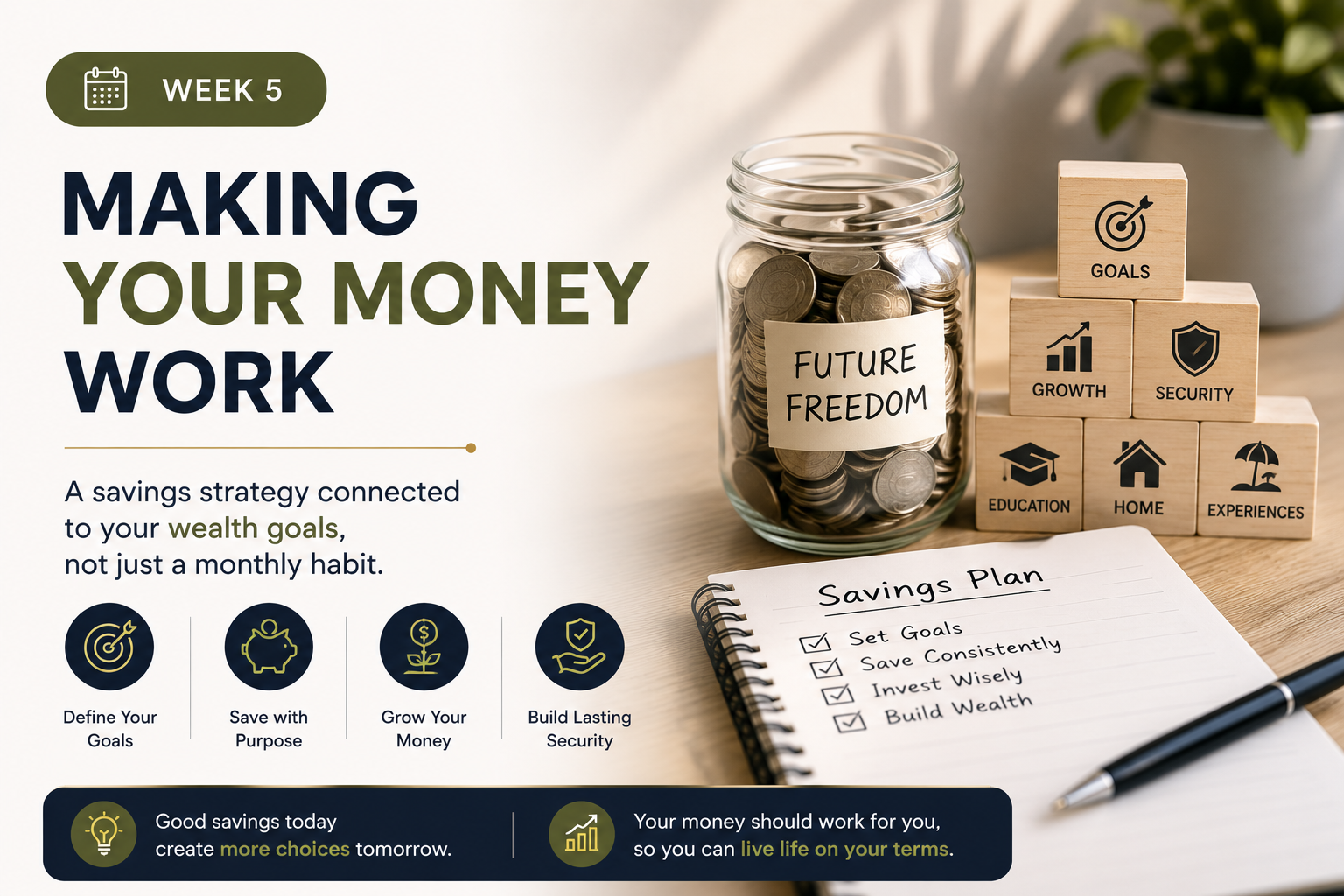
I want to be direct with you about something that most financial coaches will not say. Saving money alone will not make you wealthy. Inflation will quietly erode the purchasing power of money that just sits in a standard savings account year after year. That does not mean saving is not important because it is, it is the foundation. But knowing where to save, how much to keep liquid, when saving is the right move, and when your money should be working somewhere else entirely, that is the difference between people who feel financially stable and people who are actually building wealth. In this module we are going to cut through all the jargon, look at what savings vehicles make sense in today’s environment, and begin mapping how you can generate additional income streams that increase how much you have available to save and invest.

Outcomes

  • Understand which savings vehicles actually make sense for your specific situation right now and which ones are quietly losing you money to inflation
  • Get clear on the right balance between liquid emergency savings, short term savings, and invested assets at your current stage of wealth building
  • Explore savings strategies that are connected to your bigger financial goals rather than arbitrary monthly targets
  • Identify multiple approaches to generating additional income streams so your savings rate can actually grow rather than staying stuck at the same percentage of the same salary
  • Leave this module with a savings strategy that is part of a wealth plan, not just a habit disconnected from everything else you are building

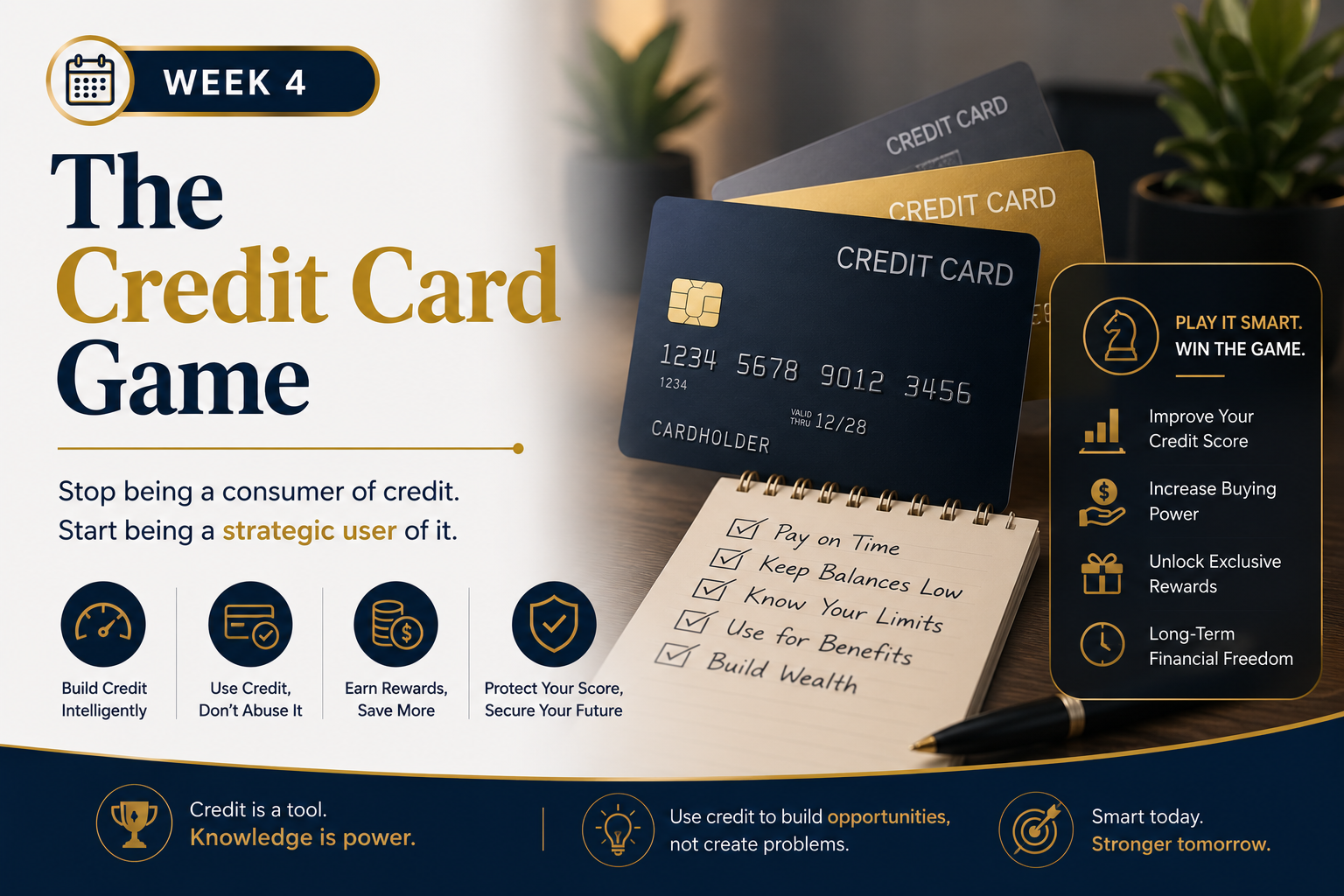
The Credit Card Game

I went from having no credit to an 838+ credit score. That did not happen because I avoided credit cards. It happened because I learned how to use them strategically and with intention. Banks and financial institutions are not your enemies but they are absolutely in business to make money off of you if you let them. And if you do not understand how they structure credit products and where they make their margins, you will spend your whole life on the wrong side of that equation. In this module I am going to show you exactly how the credit system works from the inside so you can stop being a passive consumer of credit and start being an active, strategic user of it. The difference between those two positions shows up directly in your net worth and your ability to fund the investments you want to make.

Outcomes

  • Understand exactly how financial institutions structure credit products, where they make their money, and how to avoid being on the losing side of that equation
  • Learn how your credit profile is built, scored, and maintained so you can manage it with intention and strategy rather than just hoping the number goes up
  • Develop a personal credit strategy that uses credit as a tool for wealth building, including using credit to fund real estate acquisitions and business investments
  • Build your credit toolkit including monitoring tools, dispute processes, strategic card selection, and utilization management
  • Walk away understanding how I built an 838+ credit score and the specific principles behind that journey that you can apply to your own

Your Vision

I have visited 16 countries. I have managed projects across multiple industries on multiple continents. I have built businesses, purchased properties, and traded financial markets. None of that happened by accident and none of it happened because I was hoping for the best. It happened because I got specific about what I wanted and I built a plan with real steps and real timelines to get there. This module is about doing exactly that for you. Not a vague idea of being wealthy someday. A specific, concrete vision of what your financial life looks like in two years, in five years, in ten. And then we go deeper into something most financial education programs never properly explain, which is the concept of leverage. Understanding leverage is what separates people who earn good money from people who build genuine wealth.

Outcomes

  • Define your specific financial vision with real numbers and real timelines, not a mood board but a blueprint
  • Understand leverage in all its forms, financial leverage, real estate leverage, business leverage, and time leverage, and identify which forms are most available and relevant to your current situation
  • Connect your personal vision to a direction that makes every financial decision going forward easier, because you will always know what you are building toward
  • Walk away knowing not just what you want financially but why you want it, because that why is exactly what keeps you going when building wealth gets uncomfortable or slow

Organizing Your Finances

If you have ever sat down to figure out where your money went and just felt overwhelmed, this module is going to change that permanently. I am a project manager. Organizing complex, scattered information and turning it into a clear, actionable picture is literally what I do for a living. In this module I am going to show you how to take everything that is currently spread across your bank accounts, your bills, your credit cards, and your mental load and bring it all into one organized view. Think of it as building your personal financial dashboard. Once it is built you will always know exactly where you stand.

Outcomes

  • Build your personal financial dashboard so that all income, expenses, debts, and obligations are visible in one place
  • Identify the gaps, the leaks, and the overlooked opportunities that are hiding in your current financial picture
  • Review your credit report as a financial document, not just a score, and understand what each line means for your wealth building plan
  • Prioritize the items that need your attention first using the same triage approach I use on complex consulting projects
  • Walk away with a system you will actually maintain, not a spreadsheet you look at once and abandon

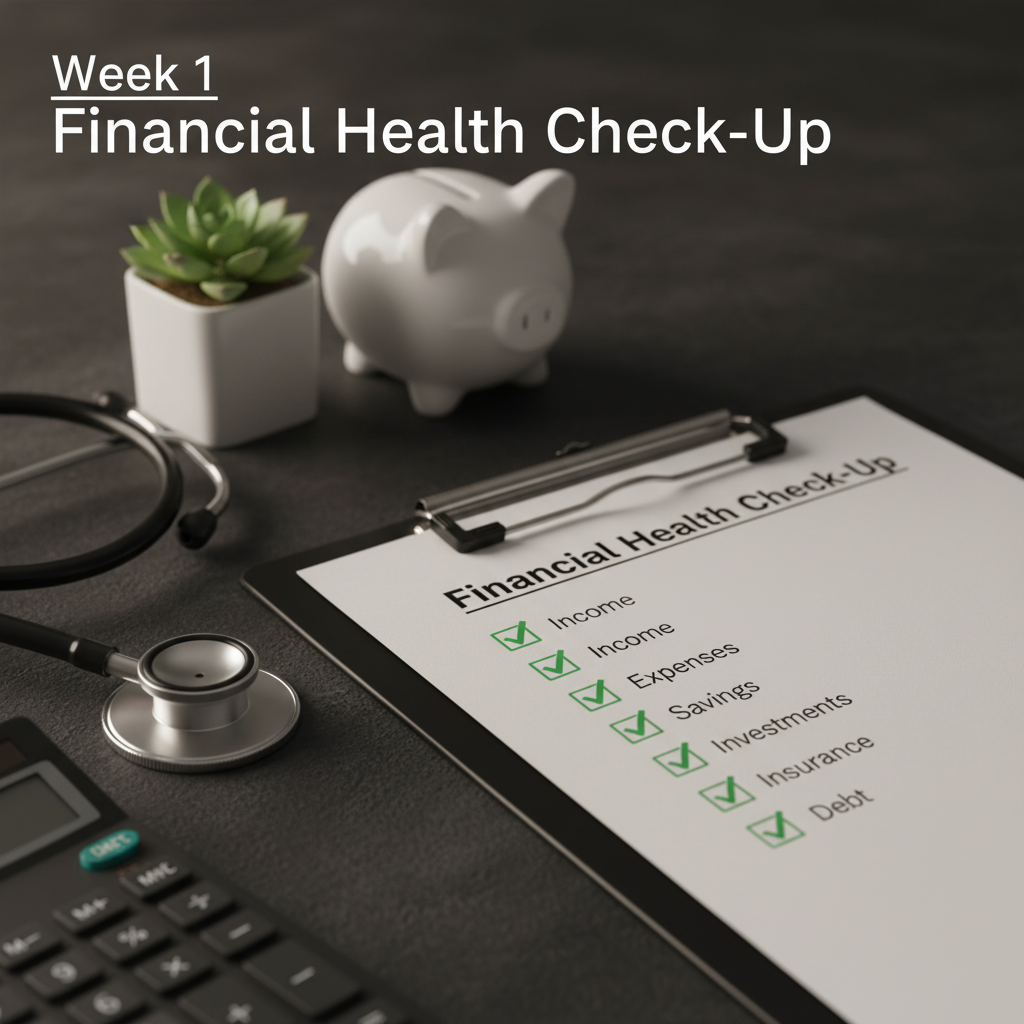
Financial Health Check-Up

You cannot fix what you will not look at. I know that sounds direct but after 15 years of working with organizations on complex projects I have learned that the most important first step is always an honest assessment of where things actually stand. Not where we hope they are. Where they actually are right now. This module is that honest look. We are going to go through your finances together the same way I would go through a project status report. No judgment. No shortcuts. Just clarity, because clarity is where every good plan begins.

Outcomes

  • Know exactly where every dollar of your income is going right now, not approximately, exactly
  • Understand your debt to income ratio and what that number means for your financial future and your ability to borrow
  • Pull your credit report and understand what is on it, what is helping you, and what is quietly working against you
  • Walk away with a clear, honest baseline so that every decision you make from this point forward is built on reality, not assumptions