How to build wealth starts with understanding what happens to your income after payday. The money you earn today can help you meet your current needs while building assets for your future. What if your money could help pay for more than just the life you live today? What if it could also help create the life you want tomorrow?
We spend years learning how to earn money, but far less time learning what to do with it once it reaches our bank accounts. Our income pays the bills, funds our lifestyle, supports the people we love, and gives us opportunities to enjoy life. But it can also help us build assets for the future.
You do not have to be wealthy to get started. You need a plan, some knowledge, and the willingness to put both to work.
At , we believe financial education should help you see your money differently. Because earning a paycheck is one thing. Deciding what you want that paycheck to build is where things get interesting.
Earning Money and Building Wealth Are Two Different Things
Imagine getting a pay increase. Exciting, right? A little extra breathing room, perhaps a long awaited purchase, or finally booking that trip you have been talking about for three years.
Enjoy it! But what if a portion of that increase also went toward building an asset or growing your savings?
That is the idea behind turning income into assets. You make intentional decisions about how much you spend today and how much you direct toward your future.
Assets can take different forms, from investments and real estate to ownership in a business. The right approach depends on your circumstances and goals.
The point is not to stop enjoying your money. It is to give some of it a job beyond leaving your account on payday.
Because if every dollar leaves your account as soon as payday arrives, somebody needs to ask who’s really in charge around here!
Give Your Money a Foundation and a Plan
Before deciding where to invest, take a look at the foundation you are building on.
Understand your cash flow. Know what comes in, what goes out, and what remains. A budget is not about cancelling every coffee date. It is about making intentional choices with your money.
Build an emergency fund. A common starting target is three to six months of essential expenses. Your needs may differ depending on your income stability, household responsibilities, and access to other resources.
Pay attention to high interest debt. Interest charges can consume money that could otherwise help you save or invest.
Define your goals. Whether you want to buy a home, prepare for retirement, support your family, or build additional income, your goals can help guide your financial decisions.
A strong foundation gives you a better starting point for considering your investment options.
There Is More to Investing Than Stocks
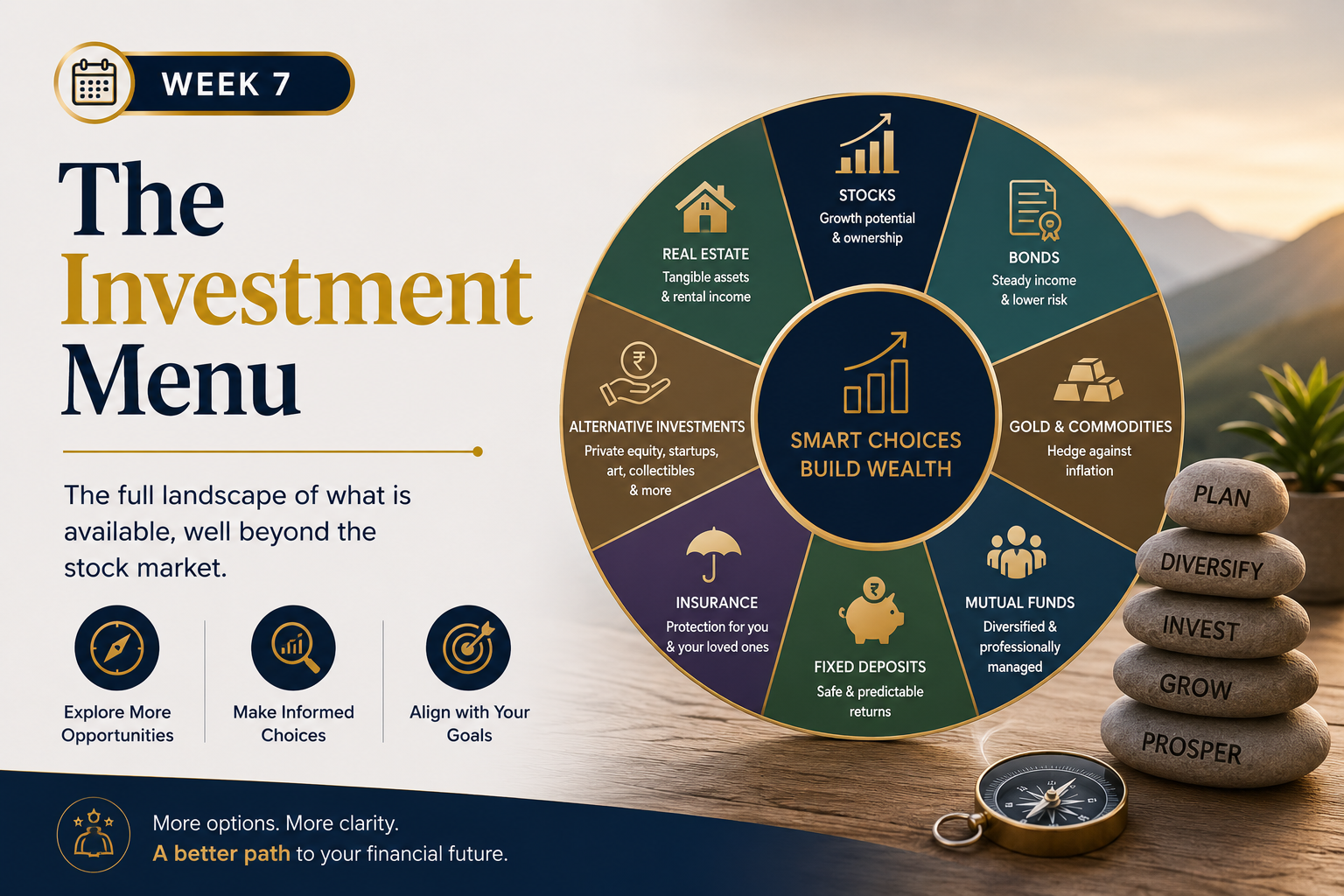
When people hear the word investing, the stock market often comes to mind. But there are many other ways to invest, each with different characteristics, costs, and risks.
Here are ten investment categories worth understanding.
- Stocks
Stocks represent ownership in companies. Investors may benefit if a business grows and its shares increase in value.
Risk: Share prices can fall, and you could lose some or all of your investment.
- Bonds
Bonds are loans made to governments or organizations that generally pay interest under agreed terms.
Risk: An issuer could fail to repay, and rising interest rates can reduce a bond’s market value.
- Mutual Funds
Mutual funds pool money from multiple investors to purchase a collection of assets, such as stocks and bonds.
Risk: The fund’s value can decline, and management fees can reduce your returns.
- Real Estate
Property may provide rental income and appreciate in value over time.
Risk: Vacancies, repairs, property expenses, changing market conditions, and difficulty selling can affect returns.
- Real Estate Investment Trusts (REITs)
REITs provide a way to invest in qualifying real estate businesses without purchasing individual properties directly.
Risk: REIT prices can fall, distributions can change, and some REITs may be difficult to sell.
- Peer to Peer Lending
These platforms connect people who lend money with borrowers seeking loans.
Risk: Borrowers may not repay, and recovering your money or withdrawing it early may be difficult.
- Commodities
Commodities include assets such as gold, silver, and agricultural products. Investors may gain exposure through different types of investments linked to their prices.
Risk: Prices can fluctuate sharply, and some commodity investments involve additional costs or complex structures.
- Cryptocurrency
Cryptocurrencies are digital assets, including Bitcoin and Ethereum.
Risk: Prices can be highly volatile, and security breaches, fraud, or regulatory changes can contribute to substantial losses.
- Private Equity
Private equity involves investing in privately owned companies, often through specialized funds.
Risk: Your money may be tied up for years, valuations can be difficult to assess, and losses are possible.
- Venture Capital
Venture capital involves investing in early stage businesses with growth potential.
Risk: Startups can fail, and investors may lose their entire investment.
Another important concept is diversification, which means spreading investments across different assets rather than relying too heavily on one. Diversification can help manage risk, but it does not eliminate the possibility of losses.
You do not have to invest in everything. The goal is to understand what is available and how different options relate to your financial goals, time frame, and ability to accept risk.
Give Your Money a Job
Imagine giving every dollar a purpose. Some dollars take care of today’s responsibilities. Others prepare for unexpected expenses. And some are assigned to help build your future.
That is the thinking behind a long term financial strategy.
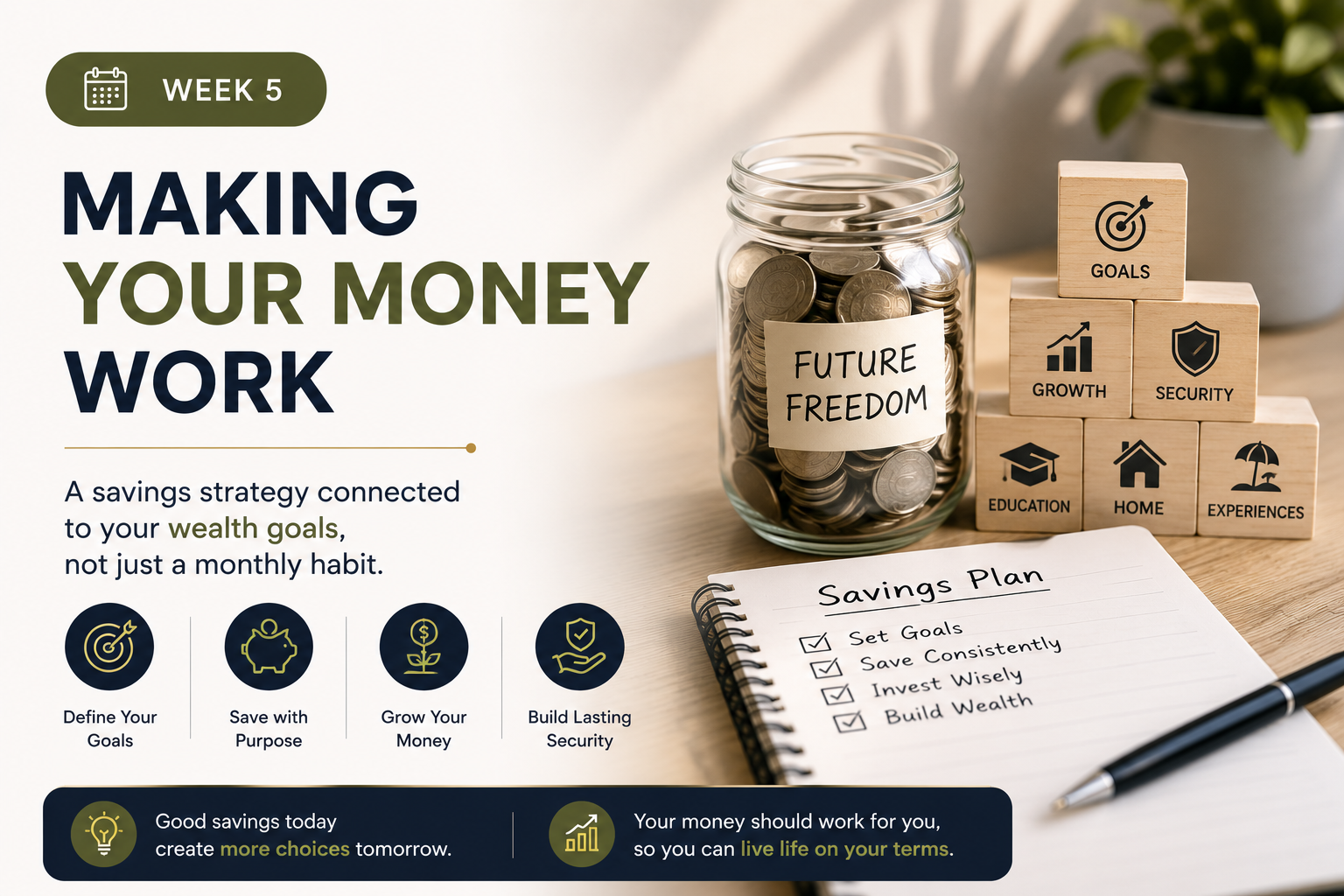
Start by asking yourself what you want your money to help you accomplish. Are you saving for a home? Planning for retirement? Preparing for your children’s education? Interested in building income producing assets that could give you more choices later in life?
Your goals help determine how you approach saving and investing. They also give you something meaningful to work toward beyond watching numbers move around on a screen.
Consistency matters, too. Regular contributions to investments may benefit from compounding, which happens when returns generate additional returns over time. Given enough time, contributions may grow substantially, depending on investment performance, fees, taxes, and other factors. Returns are never guaranteed, and investments can lose value.
The aim is not to predict every market move. It is to make informed decisions that support your goals.
Apply the Same Discipline You Use at Work
Think about how you approach a project at work. You establish an objective, identify the resources required, create a plan, track progress, and adjust when circumstances change.
Your finances can benefit from that same discipline.
Set a goal. Decide how much you can reasonably save or invest. Review your progress periodically. When your income, responsibilities, or priorities change, revisit your plan.
No, you do not need twelve spreadsheets and a weekly status meeting with yourself. Your finances are allowed to be organized without becoming a second job!
What matters is building habits you can maintain. Small, consistent decisions can add up over time, particularly when you give them a clear purpose.
At KTR Wealth, our focus is on helping people strengthen their financial knowledge and develop practical habits around earning, spending, saving, managing debt, investing, and building assets. Through education and coaching, we help connect these pieces so people can make more informed choices.
Your Income Is a Starting Point. What Will You Build With It?
Building wealth is not about chasing every new trend or getting rich overnight. It is about understanding your options, making deliberate decisions, and developing financial habits that support the life you want.
Your goals may be different from someone else’s. Perhaps you want more financial flexibility, a home, additional income, a comfortable retirement, or the ability to support your family. There is no single destination that defines financial success for everyone.
What matters is knowing what you are working toward and giving your money a role in getting you there.
Your paycheck tells only part of your financial story. The assets you build can help shape what happens next.
At KTR Wealth, we believe financial education is a powerful starting point for making that happen.
So, what will you build with yours?
Disclaimer: KTR Wealth provides financial education and coaching, not individualized financial or investment advice. This article is for educational purposes only and does not constitute financial, investment, tax, or legal advice. Investments involve risk, including possible loss of principal. Consider consulting qualified professionals before making significant financial decisions.